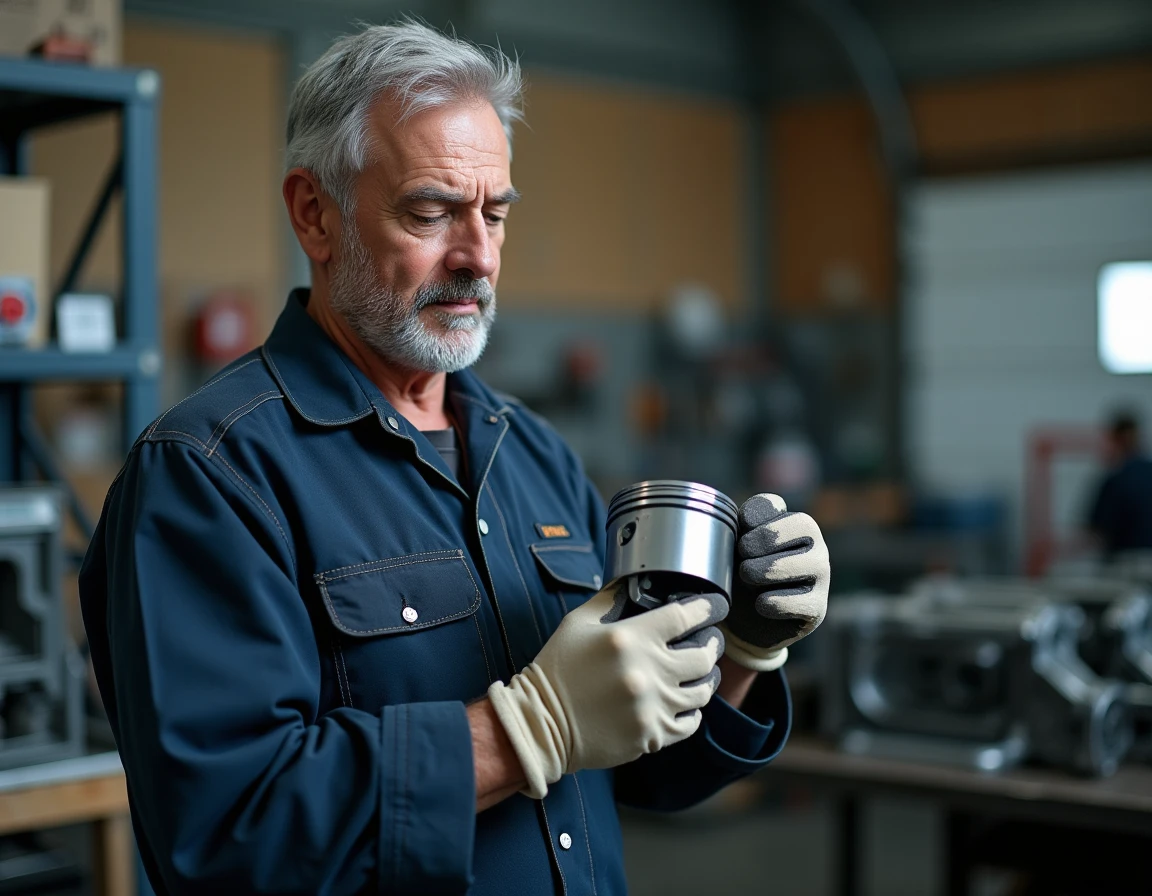
A standard cast aluminum piston works very well in a stock engine. It withstands the thermal and mechanical stresses expected by the manufacturer. The problem arises as soon as you push beyond the original power: more turbo pressure, higher RPMs, rising temperatures. This is when the forged engine comes into play, with internal parts designed to withstand loads that factory components cannot endure for long.
Cast vs. Forged Parts: What Changes in the Material
Take a heated block of aluminum, then poured into a mold: this is the principle of casting, used for the vast majority of pistons, connecting rods, and crankshafts in production engines. The metal cools, solidifies, and the part takes its shape. The process is quick and inexpensive.
Forging starts from a different approach. A metal billet is heated and then compressed under a very high-pressure press. This compression aligns the internal fibers of the metal in a uniform direction. The result: a denser metallurgical structure without microporosities.
This difference is not visible to the naked eye. However, it directly translates into mechanical strength. A forged connecting rod can withstand significantly higher tensile and compressive stresses than a cast connecting rod of the same weight. To learn more about the advantages of a forged engine, the cast/forging distinction remains the technical starting point to understand.
In practice, forging a part also allows it to be designed thinner without sacrificing strength. Forged pistons are often slightly lighter than their cast counterparts, which reduces the inertia of moving masses in the engine.
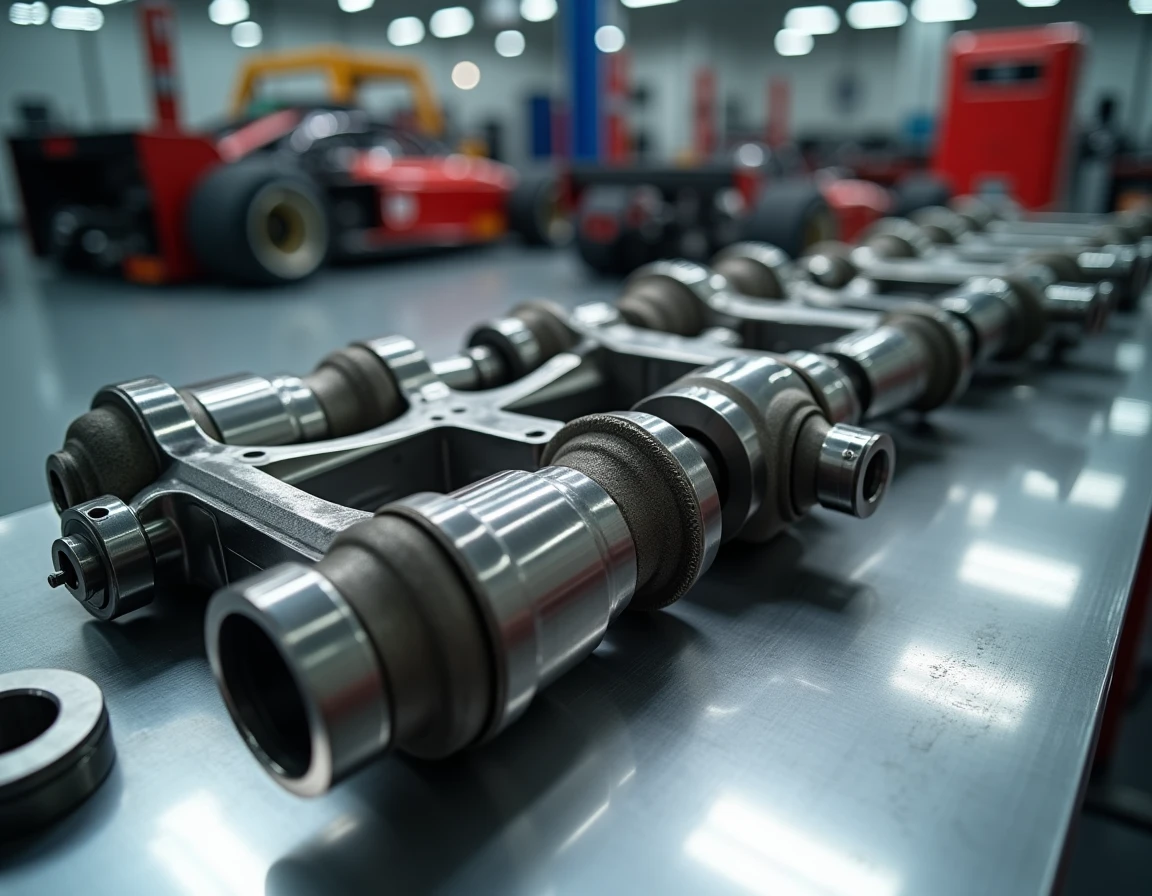
Forged Pistons, Connecting Rods, Crankshaft: Which Parts to Change First
You are considering strengthening an engine. Should everything be forged at once? Not necessarily. The choice depends on the target power level and the type of stresses.
Forged Pistons in the Front Line
Pistons directly absorb combustion pressure and thermal spikes. In a turbo engine where boost pressure is increased, forged pistons are the first logical modification. They are better at resisting detonation (the infamous “knocking”) that can perforate a cast piston in seconds.
Forged Connecting Rods for High RPMs
Connecting rods undergo alternating tensile and compressive forces with each engine cycle. At high RPMs, these forces increase exponentially. A forged connecting rod can handle high RPMs without the risk of sudden failure. It is the critical part in engines pushed beyond their original RPM range.
The Forged Crankshaft for Extreme Projects
The crankshaft is the heaviest and most expensive part to replace. In a moderately prepared stock engine, the original crankshaft often holds up. Its replacement with a forged part is justified in competition or drift projects, where torque and RPM stresses far exceed the manufacturer’s specifications.
- Forged pistons: priority for turbo engines with increased boost pressure
- Forged connecting rods: recommended as soon as the maximum RPM exceeds the original red zone
- Forged crankshaft: reserved for builds aiming for very high power levels or track/competition use
Cost of a Forged Engine: Actual Budget and Kit Prices
The price of a forged parts kit varies significantly depending on the brand, type of engine, and intended application. Prices have seen a noticeable increase in recent years, driven by inflation in raw materials and growing demand in the tuning sector.
The cost of the parts represents only a part of the total budget. You must also add the labor of an engine builder for disassembly, possible machining of the block, dynamic balancing of the moving assembly, and reassembly. This precision work takes time and requires specialized expertise.
The price dispersion is also related to the availability of parts for each engine. A forged piston/connecting rod kit for a popular 4-cylinder turbo engine (like a common Japanese or German engine) can be easily found from several manufacturers. For a rarer engine or a specific V6/V8, the options decrease and prices rise.

A point often underestimated: forging an engine requires revising the electronic management. An adapted mapping is essential to exploit the new mechanical capabilities without risking damage. This additional item weighs on the final budget.
Factory Forged Engines: When Aftermarket Tuning Loses Its Appeal
Several manufacturers now deliver engines with forged components as standard. This trend is particularly pronounced in high-end sports cars and some recent 4-cylinder turbos. The MV Agusta Brutale 1000 ABT illustrates this approach: its 998 cm³ engine is factory-designed to support over 200 hp at high RPMs, with a level of reliability compatible with road use.
Are you already driving an engine with factory-forged internal parts? Investing in an aftermarket kit only makes sense for very significant power gains, beyond what the manufacturer has planned. On these modern bases, the cost/benefit ratio of aftermarket forging decreases significantly.
- Check the technical specifications of the original engine before investing in aftermarket forged parts
- Some recent sports cars (motorcycles and cars) already include forged connecting rods or pistons as standard
- The reliability gain of an aftermarket forged kit is maximal on engines whose original internals are cast
The emergence of a range of forged parts aimed at road use, not just track, also broadens the market. Manufacturers offer forged components designed for a performance/comfort compromise, with tolerances suitable for daily use and not exclusively for competition.
The forged engine remains the reference solution for pushing the mechanical limits of a block. The question is not so much whether forging works – metallurgy speaks for itself – but whether your tuning project truly justifies it, considering the overall budget and the engine base you are starting from.