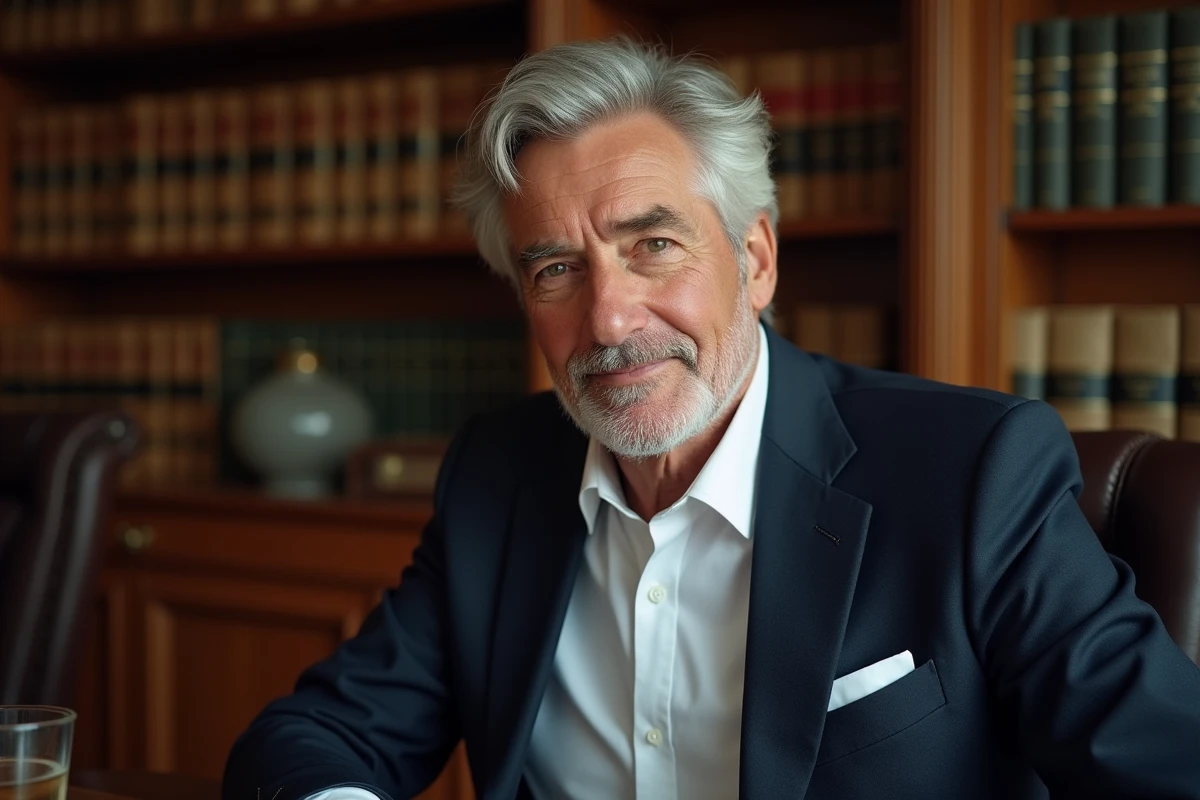
Yves Attal was a French lawyer and film producer, born on November 25, 1948, in the 16th arrondissement of Paris and passed away in 2015 at the age of 66. His name is now associated with that of his son Gabriel Attal, a political figure who became Prime Minister, but the professional trajectory of the father deserves to be examined on its own.
Yves Attal, lawyer and producer between law and cinema
Yves Attal led a dual career that gave him access to two rarely connected worlds. Trained in law, he practiced as a lawyer before turning to film production.
This shift towards cinema was not a whim. Yves Attal produced several films, establishing himself in the landscape of French cinema as a recognized professional among his peers. Understanding who Gabriel Attal’s father was requires appreciating this rare combination of legal and artistic skills in the production industry.
The profile of Yves Attal combined legal rigor with cultural sensitivity. Law provided him with a framework for understanding contracts, financing, and production arrangements. Cinema offered him a broader field of expression.
Yves Attal’s political convictions and influence on Gabriel
Gabriel Attal described his father in the pages of Vanity Fair as “the typical PS voter, a 68er who bought Libé every morning, who didn’t know the name of his district mayor but voted PS because it was the PS.” This portrait provides a useful reference: Yves Attal belonged to that generation of Parisian cultural left, engaged in his votes without actively campaigning.
The significant fact lies in the catalytic role he played in his son’s political career. Gabriel Attal revealed that his father was the only one who pushed him towards politics. His mother, on the other hand, feared a “too violent environment.”
This parental divergence sheds light on a precise family dynamic. Yves Attal projected onto his son a political ambition that he himself had not pursued. The belief that public engagement could extend his own ideals is evident in Gabriel’s testimonies.
An ideological legacy rather than a partisan one
Gabriel Attal did not follow his father’s partisan path. Initially engaged with the Socialist Party, he later joined La République en marche. The paternal legacy lies more in the conviction that politics is a lever for action than in loyalty to a label.
Yves Attal’s death in 2015 and Gabriel’s mourning
Yves Attal passed away in 2015. Gabriel Attal, then in his twenties, publicly spoke about this loss several times. “There is not a day when I don’t think about it,” he confided.
The loss of his father coincided with a pivotal period. Gabriel Attal was building his political trajectory and had not yet reached ministerial positions. The absence of his father accompanied the entire political rise of his son, which gives a particular tone to his public statements on this subject.
Gabriel Attal has never hidden the impact of this loss. In his interviews, he regularly links his professional choices to the memory of his father, as if each step taken carried the validation that Yves Attal could no longer provide.
The Attal family: origins and Parisian environment
The Attal family is based in Paris, in a privileged social environment. Yves Attal grew up and lived in the capital, and it is in this setting that Gabriel was raised.
The family background combined several characteristics:
- An anchoring in liberal and intellectual professions, typical of a certain Parisian bourgeoisie
- A proximity to cultural industries, particularly cinema and advertising
- Leftist political convictions passed down from the May 68 generation
This context provided Gabriel Attal with a dense social and cultural capital. Access to varied professional networks, from law to cinema to politics, shaped a path where the boundaries between disciplines remain porous.
The Tunisian dimension of the family
The surname Attal refers to family origins linked to Tunisia. This component, sometimes mentioned in media portrayals of Gabriel Attal, contributes to a Mediterranean family history that the father also embodied. Yves Attal carried a plural cultural heritage that transcends the Parisian framework.
Yves Attal in Gabriel’s political journey: a taut thread
The paternal figure remains a constant reference in Gabriel Attal’s public discourse. When he became Prime Minister in France, several media outlets highlighted the rare confidences of the son about his father, emphasizing how Yves Attal had anticipated this trajectory.
The paradox lies in the temporal gap. Yves Attal pushed his son towards politics, but he died before witnessing the results of this impetus. Gabriel Attal entered the government, then Matignon, without his father being able to witness it.
This absence structures part of Gabriel Attal’s personal narrative. The memory of Yves Attal functions as a silent engine, visible in interviews where the son measures each advancement against what his father would have thought. The portrait of Yves Attal does not close with his passing: it continues to be written through his son’s choices.