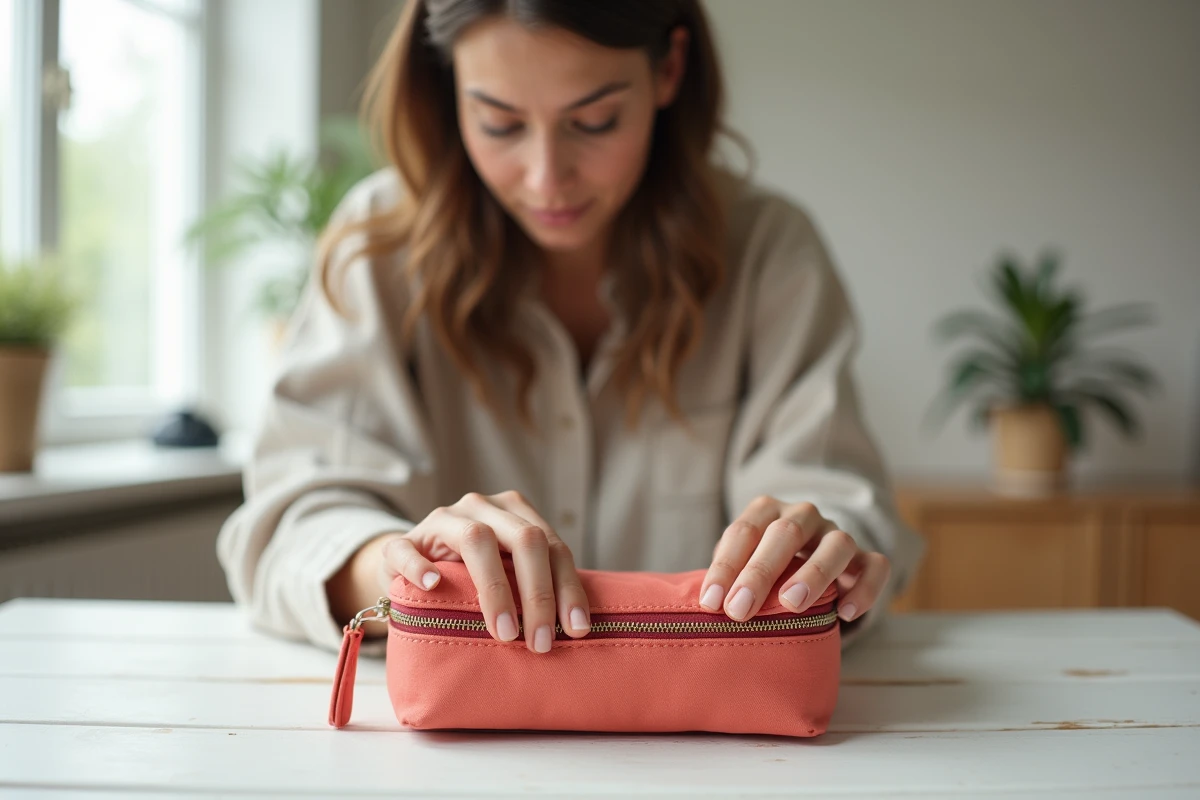
When you receive a Cabaia bag purchased from a marketplace, you turn it inside out, and something feels off without knowing exactly what. The fabric seems fine, the logo is there, the colors match. However, recognizing a fake Cabaia bag requires checking specific details that counterfeiters almost always overlook.
Weight and dimensions of the Cabaia bag: the test that no one does
Before even looking at the finishes, you can start with a simple action: weigh the bag. Counterfeits often show a notable weight discrepancy compared to original models, usually perceptible by hand and measurable with a kitchen scale. A fake Cabaia is generally lighter, sometimes strikingly so.
The interior dimensions pose the same issue. On a counterfeit model, there is often a discrepancy of one to two centimeters compared to the official measurements. This is not visible to the naked eye when the bag is placed on a table, but a tape measure is enough to confirm a doubt. The exact dimensions of each model can be found on the official Cabaia website.
To delve deeper into this topic, several tips for spotting a fake Cabaia bag allow you to cross-reference these physical checks with other visual criteria.
Stitches and zippers: where counterfeits reveal themselves
We tend to examine the logo first. Counterfeiters know this and increasingly pay attention to the visual reproduction of the brand. The real weak point of fake Cabaia bags lies elsewhere: the stitching and closures.
The interior stitching of the bag
Turn the lining inside out. On an authentic bag, the interior stitching is regular, with no loose threads, and features clean topstitching. Counterfeits show irregular stitching and loose threads, sometimes from the first use. The connections between the fabric panels are a good indicator: on an original, each junction is aligned.
The zippers and sliders
The zippers on a real Cabaia glide smoothly and often have a discreet marking on the slider. A zipper that sticks, a slider without an inscription, or metal that appears dull compared to the rest of the bag is a warning sign. Feedback varies on this point depending on the models, but the smoothness of opening remains a reliable criterion.
Cabaia logo and labels: the details that make the difference
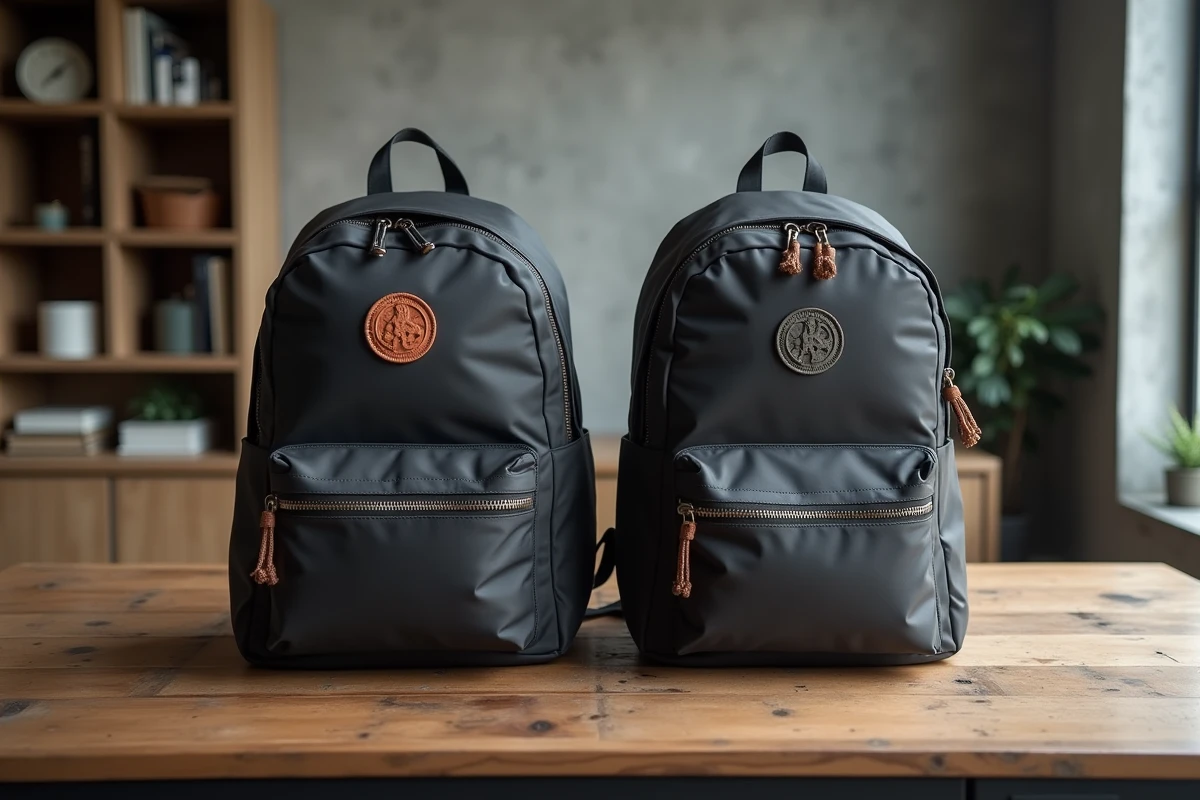
The logo embroidered or printed on Cabaia bags maintains consistent proportions and positioning from one model to another. On counterfeits, you often observe discrepancies: lettering that is slightly too thick, irregular spacing between characters, or asymmetrical positioning relative to the front pocket.
- The interior label of an authentic Cabaia bag mentions the material composition, country of manufacture, and a lot number. A blurry label, glued rather than sewn, or written with mistakes, betrays a counterfeit.
- The typography of the logo must be sharp and uniform. A slightly blurry or grainy logo indicates a reproduction using low-resolution printing, a common technique among counterfeiters.
- On recent models, the brand uses specific packaging elements (pouches, boxes) whose quality is difficult to replicate exactly. A generic or absent packaging should raise a red flag.
Cabaia counterfeits on Vinted and Leboncoin: an underestimated risk
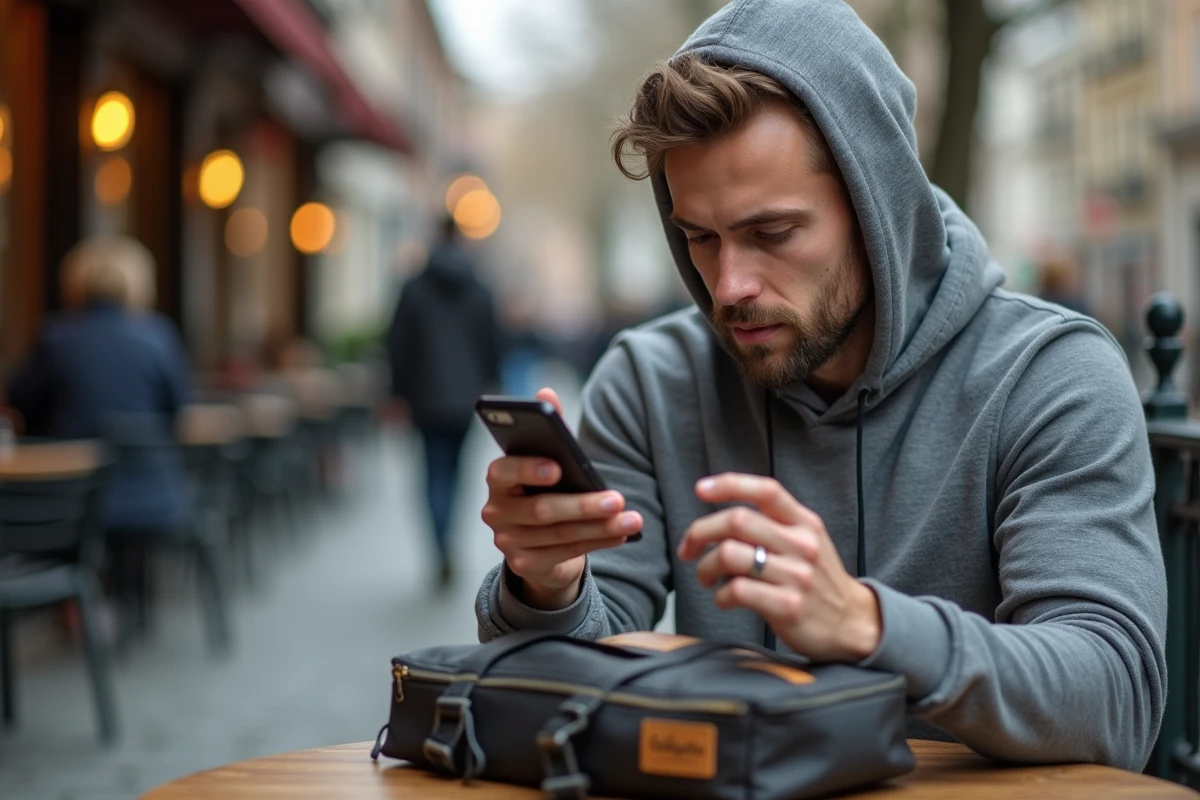
Fakes are often associated with dubious websites based abroad. The reality has changed. For a few years now, Cabaia counterfeits have been circulating on reputable platforms like Vinted and Leboncoin. Sellers exploit the trust that buyers place in these French marketplaces.
The Facebook group “Vinted Prevention” regularly reports fake Cabaia bags sold as authentic, sometimes with real photos of the original model and a price just low enough to seem credible without raising suspicion.
Here are a few reflexes to adopt before confirming a second-hand purchase:
- Request additional photos of the interior label, stitching, and the bottom of the bag. An honest seller has no reason to refuse.
- Compare the stated weight (if mentioned) with that of the model on the official Cabaia website.
- Check the seller’s history: a recent profile with only branded bags for sale is a classic warning sign.
- Be wary of prices that are too attractive for recent or limited edition models, which normally resell close to the new price.
Materials and fabric feel: the Cabaia quality at your fingertips
Cabaia bags use recycled polyester fabric with a sufficiently dense weight to withstand daily use. To the touch, the fabric of an original is soft yet structured, with a slight resistance to creasing. A fabric that is too thin or too rigid betrays a substitute material that is less expensive.
The inner lining shows the same difference. On an authentic bag, it is smooth, with no pronounced chemical odor, and securely attached to the walls of the bag. Counterfeits sometimes emit a noticeable solvent smell upon opening, a sign of low-quality materials and unsuitable industrial adhesives.
Authenticating a Cabaia bag does not rely on a single isolated criterion. It is the combination of weight, stitching, logo, label, and feel that allows you to make a decision. When two or three of these points raise questions about the same bag, the likelihood of a counterfeit becomes very high.