Your baby has been sleeping in a crib next to your bed since birth, and you’re starting to wonder when to suggest their own room. This question arises for almost all parents, often within the first few months. The answer depends less on a specific age than on the baby’s maturity and the safety of their sleeping environment.
Safe sleeping: what matters before the transition age
Before even considering the ideal timing, there’s one topic that many parents rush through: sleeping safety takes precedence over the sleeping location. Whether your child sleeps in your room or their own, the rules remain the same.
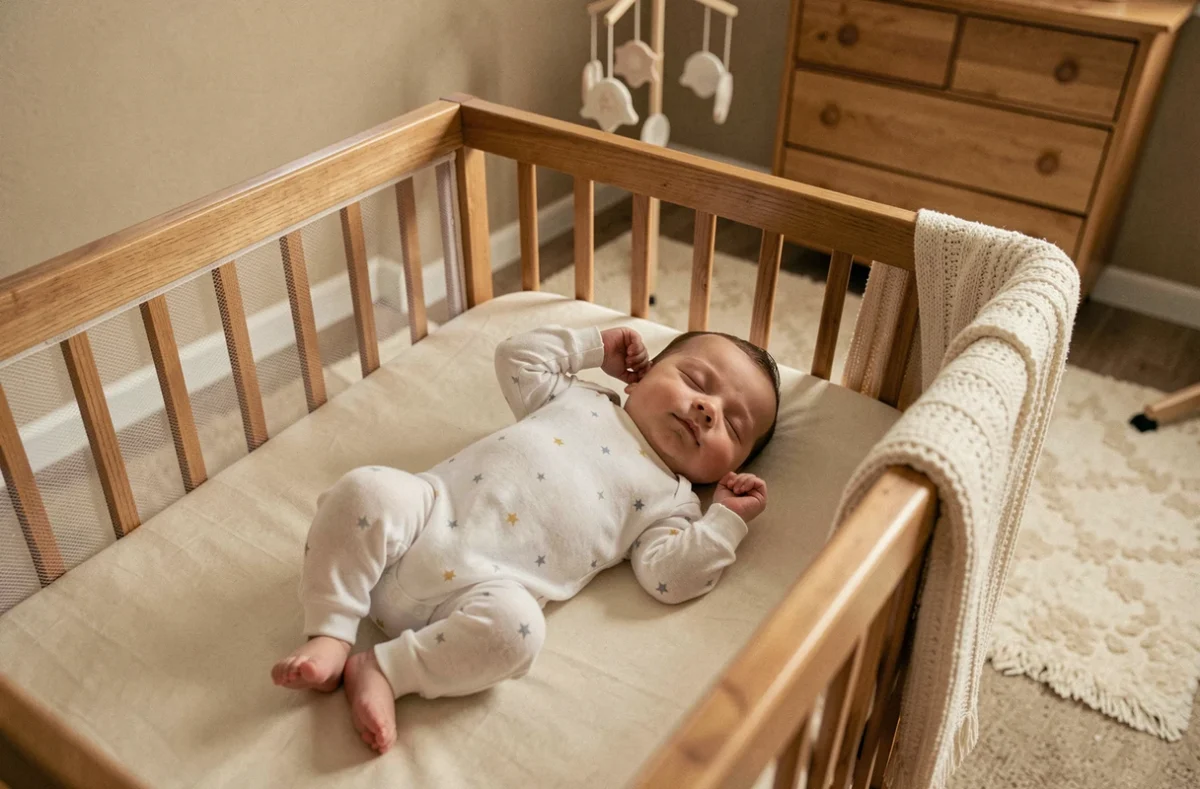
A baby sleeps on their back, on a firm, flat surface, in their own bed. No pillow, no blanket, no bumper, no stuffed animal. These precautions reduce the risk of sudden infant death syndrome, and they apply regardless of where the bed is placed.
You may have heard of the co-sleeping crib, the one that attaches to the side of the parental bed. It’s a good compromise to keep your baby close while providing their own separate sleeping surface. Be careful not to confuse this device with sharing an adult mattress, which is discouraged by health authorities.
One article details when to put baby in their room according to Super Mamans, reminding that each family progresses at their own pace on this topic.
Sleeping alone in their room: the six-month recommendation and what it really means
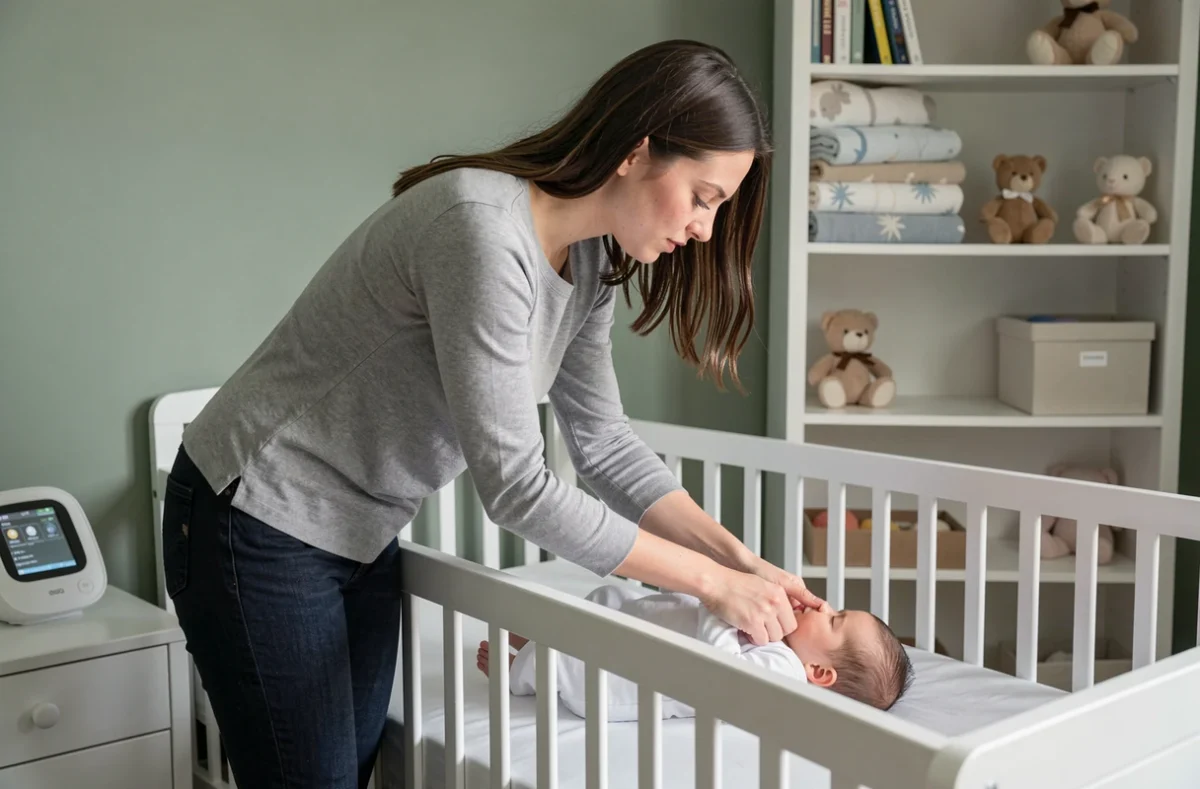
The most cited recommendation comes from the WHO and the American Academy of Pediatrics (AAP): keep baby in the parental room for at least six months. This duration is a minimum, not a deadline. There’s no obligation to move your child’s bed on their six-month birthday.
What this recommendation really says is that room-sharing (not bed-sharing) reduces risks associated with infant sleep during this period. After six months, the decision is up to the parents, based on their situation and the signals sent by the baby.
What this recommendation doesn’t say
It doesn’t set an upper limit. Some children sleep in the parental room well beyond six months, and that’s not a problem in itself. The recommendation also doesn’t concern the quality of parental sleep, which plays a role in the balance of the whole family.
Are you sleeping poorly because your baby wakes you at every little movement? This is not a whim on your part. Parental sleep is part of the equation. An exhausted parent is less alert, even at night.
Signs of baby’s maturity to sleep alone at night
Rather than looking for a universal age, observe your child. Some concrete signs indicate they are ready to move to their room:
- They are having longer nights without asking for a feed or bottle. Their nighttime awakenings are becoming less frequent, and they sometimes fall back asleep without intervention.
- They are no longer startled as frequently. The Moro reflex, that sudden arm movement that wakes little ones, generally diminishes around four to five months.
- They seem bothered by your movements or presence. If your baby wakes every time you move or cough, proximity becomes counterproductive for their sleep.
- They fall asleep independently. When your child can fall asleep without being held, they have a key skill to manage a nighttime awakening alone.
None of these signs is sufficient on its own. It’s their combination that provides a reliable indication. A four-month-old ticking all these boxes is likely more ready than an eight-month-old ticking none.
Successfully transitioning to baby’s room without a harsh break
The transition doesn’t happen overnight. Here’s how to proceed step by step so your child can acclimate to their new sleeping space.
Familiarize the baby with their room during the day
Start by having awake and playtime there. Your baby then associates this room with a pleasant place, not just with the separation of bedtime. After a few days, offer a nap there. If it goes well, that’s an encouraging signal.
Establish a stable bedtime ritual
A short, repetitive ritual helps the baby anticipate sleep. This could be a song, a board book read together, or simply a cuddle in the room before placing the child in their bed. Consistency matters more than the duration or complexity of the ritual.
Stay accessible without being intrusive
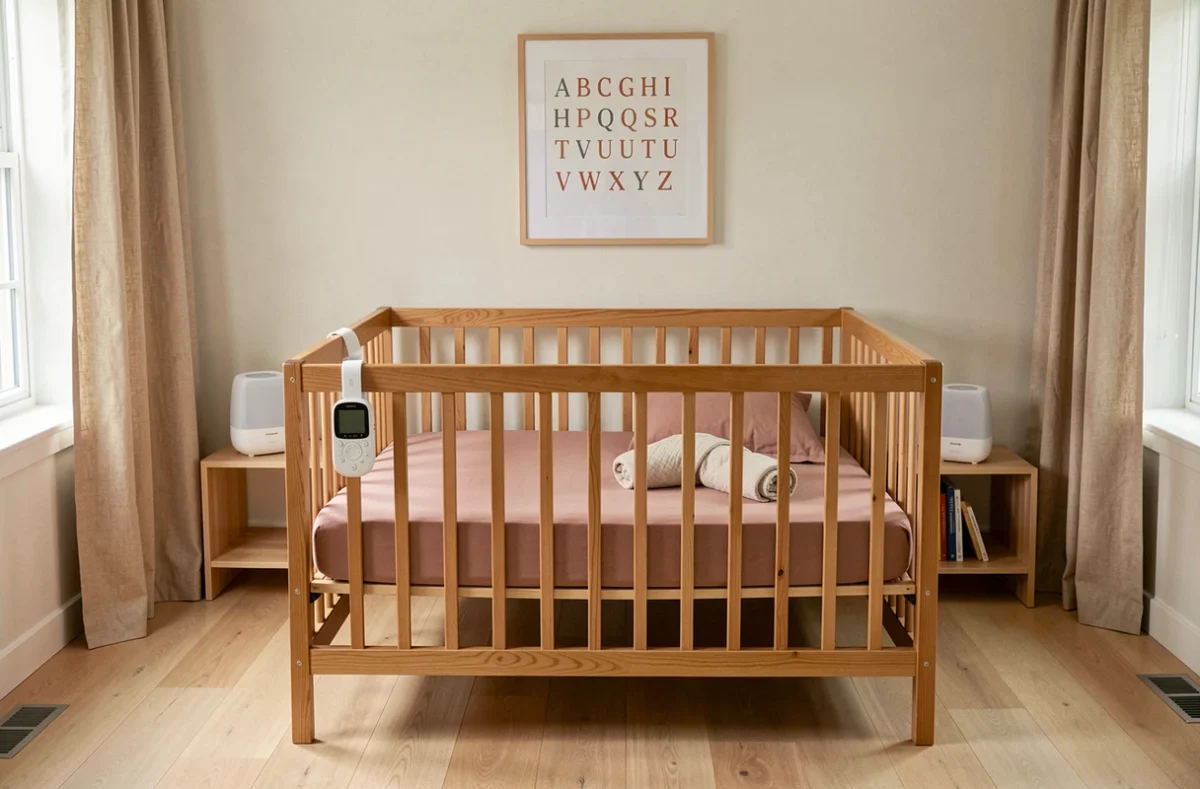
A baby monitor allows you to hear your child without being physically in the room. Wait a few minutes before intervening when they make noise at night. Many babies make sounds while sleeping or wake briefly before falling back asleep on their own.
If your child is crying genuinely, go reassure them. Stay calm, speak softly, and avoid turning on a bright light. The goal is to show that you are there without recreating the conditions for falling asleep in your arms.
When the transition doesn’t work the first time
Your baby refuses to sleep in their room after several attempts? This is neither a failure nor a sign of a problem. Teething, a cold, a change in caregivers, or a trip can disrupt a child’s sleep for several weeks.
Temporarily returning to the crib in the parental room does not erase progress. Your baby retains the acquired cues. You can restart the transition once the difficult period has passed.
Some children need two or three attempts spread over several weeks. Others adapt in just a few nights. Both scenarios are normal, and neither predicts anything about your child’s future sleep.
The only thing that deserves particular attention is a sudden and lasting change in sleep (very frequent awakenings, inconsolable crying every night for more than two weeks). In this case, medical advice helps rule out a physical cause like reflux or an ear infection.