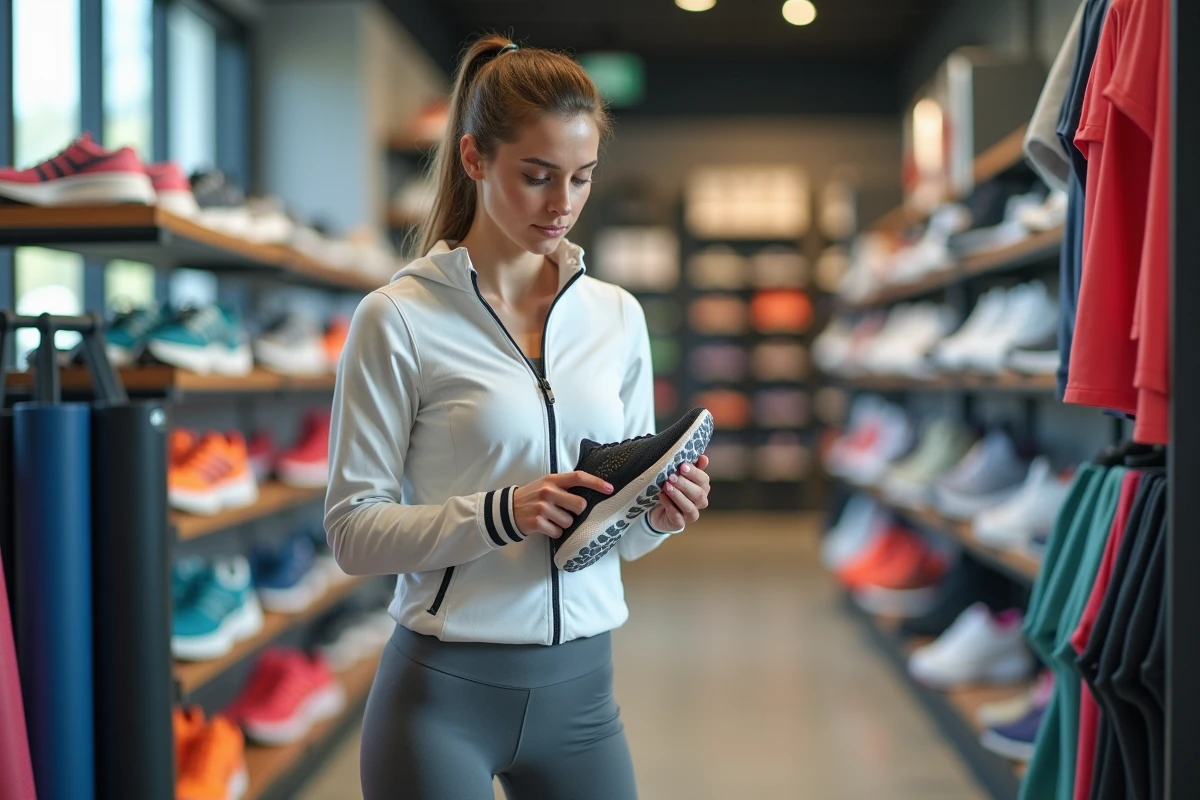
Choosing sports equipment suitable for one’s discipline is not just about comparing prices or brands. The question that truly guides the purchase revolves around three measurable variables: the practitioner’s morphology, the biomechanical constraints of the sporting gesture, and the durability of materials in real use. These criteria separate high-performance equipment from a disappointing purchase.
Textile Standards and PFAS Restrictions: What Changes for Waterproof Equipment
Since January 2026, Regulation (EU) 2024/3190 imposes restrictions on per- and polyfluoroalkyl substances (PFAS) in waterproof sports textiles. This standard directly concerns running jackets, open-water swimming suits, and cycling windbreakers.
PFAS were used to ensure waterproofing without weighing down the fabric. Their removal forces manufacturers to reformulate their membranes with wax or silicone-based alternatives. For the practitioner, this means that the old benchmarks for waterproof performance are no longer reliable on new models.
Before buying a jacket or suit, check if the product bears the compliance mark for Regulation 2024/3190. A compliant garment uses fluorine-free water-repellent treatments, which are often slightly less durable when washed, but whose health and environmental profile is significantly better. Specialized catalogs like abcsports.fr allow filtering references by applicable standard, simplifying comparison.
Sports Equipment and Morphology: Comparative Table by Discipline
Morphological adaptation remains the most underestimated factor when making a purchase. A running shoe designed for a narrow foot does not protect a runner with a wide foot, regardless of the advertised cushioning level. This principle applies to each discipline with different parameters.
| Discipline | Main Morphological Criterion | Relevant Equipment | Risk if Inadequate |
|---|---|---|---|
| Running | Foot strike type and width | Running shoes | Shin splints, plantar fasciitis |
| Cycling | Femur length and hip flexibility | Saddle and stem | Lower back pain, perineal numbness |
| Fitness / Weightlifting | Shoulder joint range | Bar, grips, sports bra | Rotator cuff tendinitis |
| Swimming | Chest circumference and arm span | Wetsuit, goggles | Chafing, respiratory restriction |
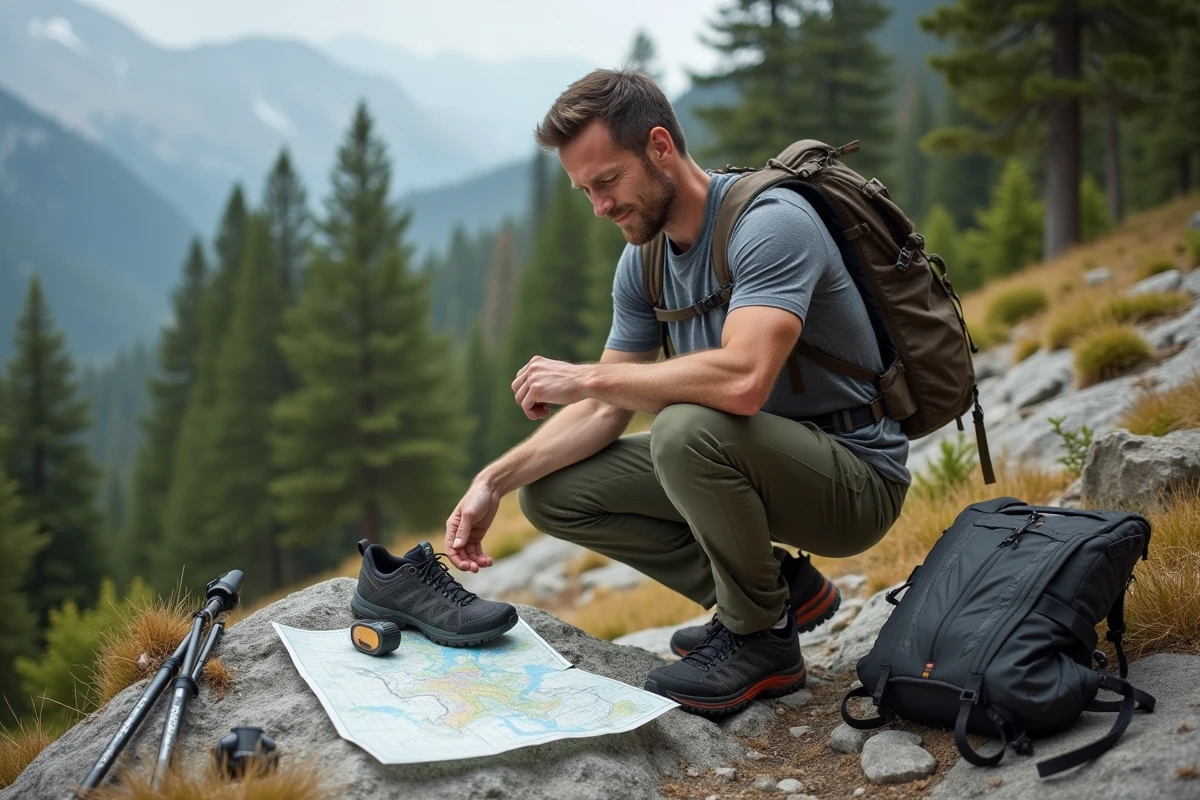
| Hiking | Foot arch and carrier weight | High-top shoes, insoles | Blisters, sprains |
This table highlights a point that general guides overlook: each discipline stresses a different anatomical area, and the equipment must respond to this specific demand. Buying running shoes without knowing one’s foot strike type is akin to choosing glasses without prescription.
The Option of Interchangeable Insoles for Multi-Discipline Practitioners
A qualitative study by INSEP published in April 2026 notes a growing preference for modular equipment. Interchangeable insoles for hiking shoes are the most concrete example: the same shoe model can accept a rigid insole for rocky terrain and a soft insole for fast walking on trails.
This modularity avoids multiplying pairs and allows for post-purchase customization without complete renewal. For a practitioner alternating between trail running and hiking, the gain is direct on budget and storage space.
Sports Shoes: Selection Criteria Beyond Size
Shoe size is a starting point, not a sufficient selection criterion. Two shoes in size 42 can differ by several millimeters in width, drop (the height difference between heel and forefoot), and internal volume.
- The drop influences running posture: a high drop (greater than 8 mm) suits runners who heel strike, while a low drop favors a midfoot strike but requires a gradual transition
- The width of the shoe varies significantly between brands, with some running narrow by default, causing lateral compression on wide feet
- The weight of the shoe impacts muscle fatigue during long efforts, but an overly light shoe often sacrifices cushioning and stability
In running, these three parameters matter more than the brand or price. A test in a specialized store with gait analysis on a treadmill remains the most reliable method to cross-reference this data.
Urban Biking: When Low-Cost Equipment Outlasts Premium in Durability
A comparative test published by Que Choisir in March 2026 revealed a counterintuitive result: low-cost urban cycling equipment certified ISO 9001 shows greater durability than some European premium brands. The explanation lies in recent advancements in lightweight alloys used by Asian manufacturers.
For the urban cyclist, this changes the usual reading grid. The reflex to associate high price with superior quality no longer systematically applies to this segment. However, ISO certification remains a relevant indicator: it guarantees quality control in production, regardless of the product’s geographical origin.
Bicycle Clothing: Thermal Comfort and Freedom of Movement
The choice of cycling shorts or jersey is based on two measurable criteria: the density of padding at the seat and the elasticity of the fabric in the direction of pedaling movements. Too rigid shorts limit hip flexion. An overly loose jersey creates noticeable aerodynamic drag as soon as speed exceeds a certain threshold.
Clothing suitable for cycling must also manage sweat evacuation. Open mesh fabrics on the back and sides offer better thermal comfort than waterproof membranes, except in prolonged rainy conditions.
Choosing Fitness Equipment: Joint Range and Suitable Fabric
In fitness and weightlifting, the garment must never limit the range of motion. A too-compressive sports bra reduces respiratory capacity during long sets. Leggings without sufficient elasticity at the knees hinder deep squats.
- High-support bras are suitable for high-impact exercises (jumps, burpees), while moderate support is sufficient for yoga or Pilates
- Fitness shoes with flat soles offer better stability in squats and deadlifts than running shoes with a high drop
- Weightlifting gloves protect the palms but reduce proprioception on the bar, which can hinder load control
The choice of fitness equipment benefits from being guided by the type of exercise practiced rather than by a logic of versatility. Equipment labeled “multisport” often makes compromises on each parameter without excelling anywhere.
The most useful data to guide a sports equipment purchase remains the correspondence between the practiced gesture and the mechanical constraint that the equipment must absorb. Standards evolve, manufacturing technologies do too, but ill-fitting equipment for the practitioner’s morphology remains the primary factor for avoidable injury, regardless of the discipline.