
So-called fairy-tale destinations are saturating travel news feeds, but the actual conditions for visiting have changed profoundly in recent years. Access quotas, preservation taxes, temporary closures of natural sites: planning a trip around the world to these places now requires navigating constraints that didn’t exist a decade ago.
Regulations and quotas: what changes access to fairy-tale sites
The fantasy of a preserved landscape accessible to all is confronted with an increasing administrative reality. More and more fairy-tale destinations are imposing quotas and time slots to limit pressure on ecosystems.
At Maya Bay in Thailand, access is limited by a daily cap and a one-hour visit duration. Swimming is prohibited, and the bay periodically closes to allow the ecosystem to regenerate. Bali has been applying a tax of 150,000 rupiah since 2024 for ecological and cultural preservation. Japan has raised its international departure tax to fund the maintenance of its historical sites and infrastructure.
These measures do not make destinations inaccessible, but they change the way to build an itinerary. A trip around the world that includes Southeast Asia and Japan must integrate these booking delays, caps, and additional costs from the preparation phase. For those wishing to explore the site Voyage aux Pays des Merveilles, the diversity of proposed itineraries allows for anticipating these constraints in advance.
Tourist dispersion: fairy-tale destinations off the beaten path
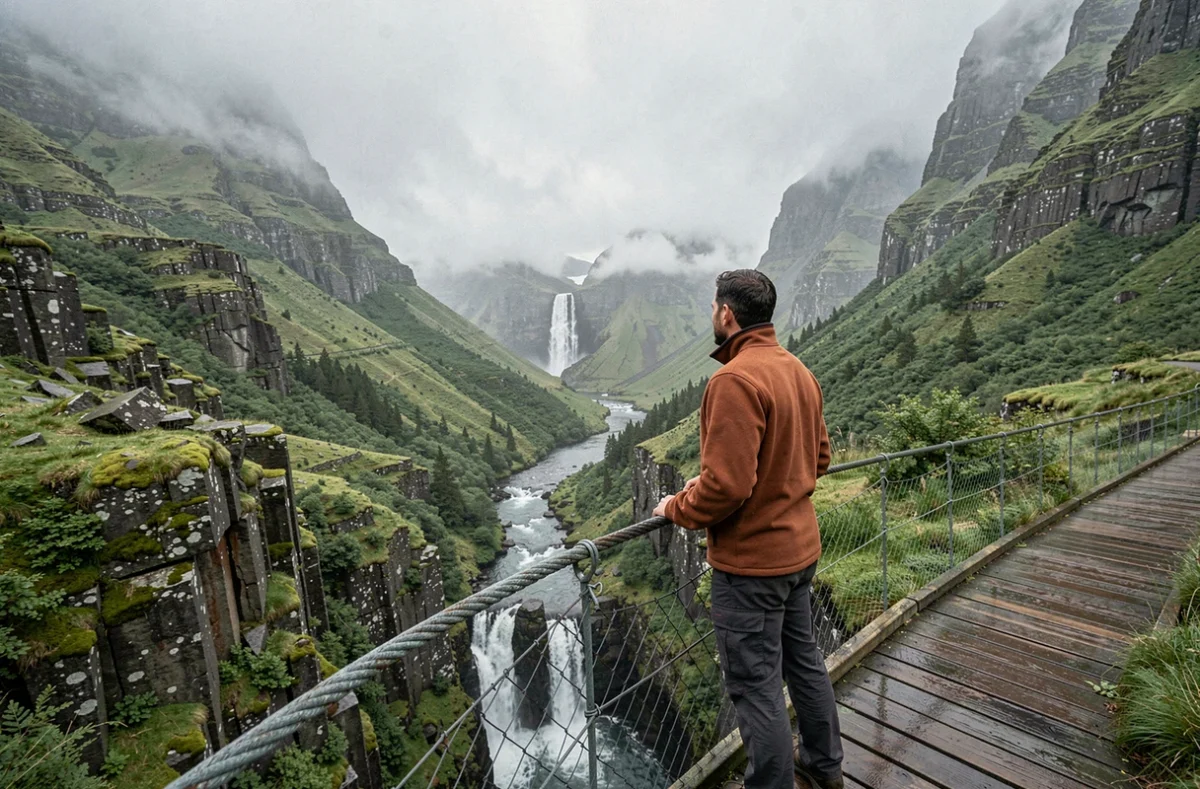
The notion of a fairy-tale destination is not limited to viral landscapes. Some tourist dispersion strategies reveal equally remarkable places, but without the queues.
In Japan, the “Undertourism” program by InsideJapan directs travelers to regions like Yamaguchi, Nagasaki, Toyama, Nagoya, and Aomori. These regions appear in an increasing proportion of the circuits offered by the operator. The idea is not to flee beauty, but to seek it where tourist pressure remains low.
In Europe, Italy offers a similar case. The small towns and villages of Italy, long ignored in favor of Rome, Florence, or Venice, are becoming destinations in their own right for travelers seeking preserved natural landscapes and authentic heritage.
Some criteria to identify a fairy-tale place off the beaten path
- The absence of a central booking aggregator for the site, indicating a still modest tourist flow and local management of hospitality.
- The presence of a community program or a sustainable tourism label supported by locals, a sign that the place has not yet been absorbed by mass tourism.
- Access that requires a logistical detour (secondary road, boat transfer, regional connection), a natural filter against overcrowding.
Community itineraries in Mexico and beyond
Lists of fairy-tale destinations generally offer landscapes. Rarely do they include experiences built with local populations. Community itineraries change this logic.
In Mexico, the community destinations of Maya Ka’an, Camino del Mayab, and Pueblos Mancomunados encompass more than 78 communities. These itineraries combine trails, gastronomy, and local craftsmanship in a logic that goes beyond simple landscape contemplation.
This model deserves attention for a trip around the world. Rather than chaining together Instagrammable viewpoints, an itinerary incorporating these community experiences provides access to places that classic circuits do not cover. The fairy-tale character comes not only from the scenery but from immersion in a still-living way of life.

Real cost of a fairy-tale trip: taxes, access, and season
The budget for a trip to fairy-tale destinations is no longer limited to the airfare and accommodation. Preservation taxes and access fees to sites modify the overall cost of an itinerary around the world.
The Balinese tax, paid slots for certain natural parks, permits for hiking in protected areas: these expenses add up quickly when visiting multiple destinations on the same trip. Field reports vary on the actual impact of these taxes on attendance, with some travelers reporting a more qualitative experience due to the reduced number of visitors, while others lament a price-based selection effect.
Seasonality also plays a direct role. Traveling in winter to Northern European destinations (Norway, Iceland) for their snowy landscapes, or with family during the Christmas holidays to Central American countries for their tropical nature, involves significant price differences depending on the departure periods.
Often underestimated expense items
- Local ecological preservation taxes, sometimes collected upon arrival and not included in the packages from online agencies.
- Transfers to isolated sites (boats, off-road vehicles), whose cost can exceed that of accommodation in some remote regions.
- Specific insurances required to access natural parks or protected areas, particularly in South America and Southeast Asia.
A fairy-tale trip around the world remains achievable, but the budget must incorporate these new layers of costs related to site preservation. The most photographed destinations are not always the most expensive: sometimes, a detour to a lesser-known region offers a much more favorable value for money, with equally stunning landscapes.
The very notion of a fairy-tale destination is evolving. It is no longer reduced to a spectacular panorama, but now includes the quality of local hospitality, the sustainability of access, and the traveler’s ability to adapt to visiting rules that protect what makes these places extraordinary.