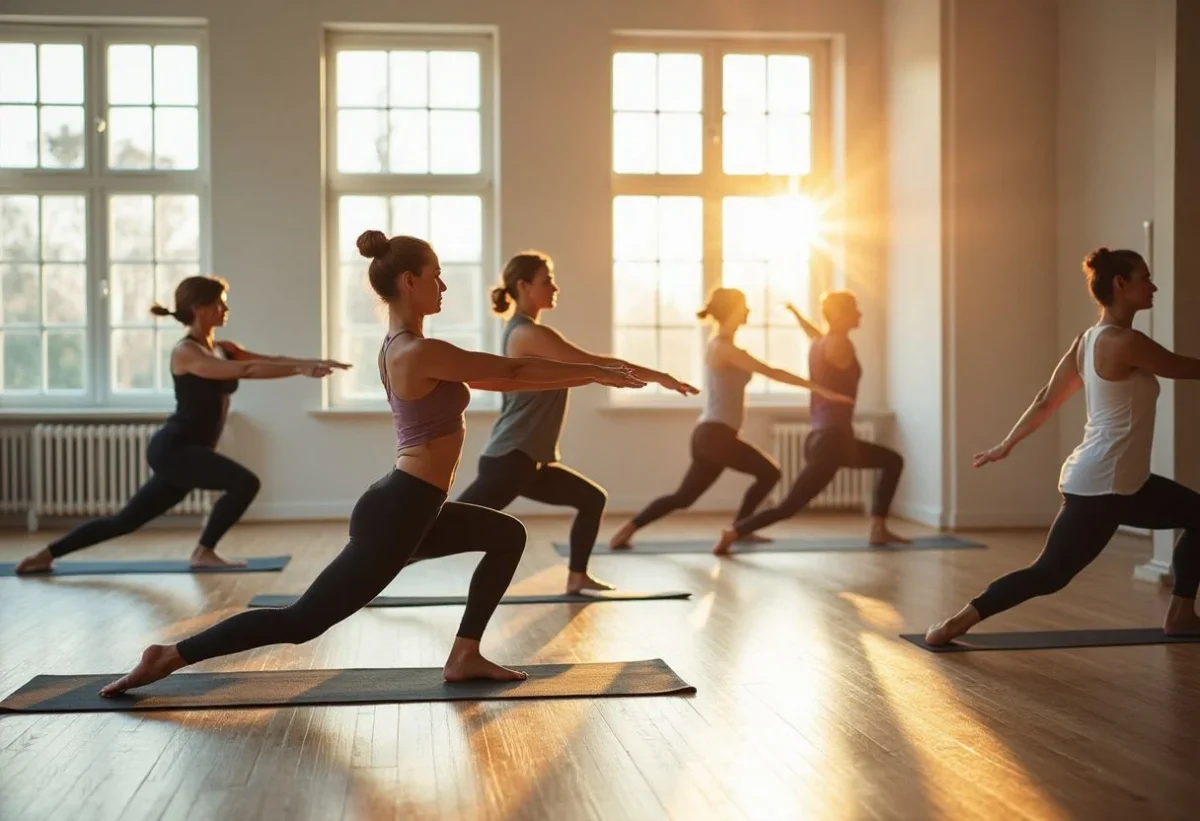
The quest for a perfect balance between body and mind is a goal that many aspire to achieve in our modern society. In this journey towards personal harmony, Pilates stands out as an essential method for anyone looking to strengthen their muscles while improving their posture and flexibility. Created in the early 20th century by Joseph Pilates, this system of exercises has become synonymous with physical and mental health. Its growing popularity is not a matter of chance, but rather the result of its numerous benefits.
Strengthening the Body and Mind
Through Pilates, one discovers a holistic approach to exercise that engages not only the body but also the mind, fostering a harmonious development of both.
Pilates focuses on the deep muscles, often neglected during traditional workouts. These muscles, known as stabilizing muscles, play a key role in maintaining posture and preventing injuries. By working on these muscles, Pilates helps to strengthen the body from the inside out, thus ensuring a solid physical foundation.
But Pilates is not simply a physical workout. The concentration required by each movement encourages a deep connection between the body and mind. This union contributes to better focus, reduced stress, and increased mental clarity. Thus, as the body strengthens, the mind also gains serenity.
Improving Posture and Reducing Pain
For those who spend long hours sitting in front of a computer, Pilates can prove to be a lifesaver by correcting postural imbalances that often lead to pain.
- Posture Correction: Pilates focuses on the correct alignment of the body, which helps to correct poor postural habits. By strengthening the core, one improves stability and balance, thereby reducing unnecessary tension on the spine.
- Reduction of Back Pain: Many Pilates practitioners notice a significant decrease in back and neck pain. The exercises specifically target the muscles that support the spine, helping to relieve tension and reduce the risk of injuries.
Improving Flexibility
One of the often underestimated aspects of Pilates is its positive effect on flexibility, which plays a crucial role in injury prevention and enhancing physical performance.
Pilates sessions incorporate gentle and progressive stretches. These movements help to lengthen the muscles and increase the range of motion. This increase in flexibility not only helps to prevent injuries but also improves performance in other physical activities. By combining strength and flexibility, Pilates offers a perfect balance that enhances daily quality of life.
To better understand the benefits of Pilates, a useful resource is available on this site, which explains in detail the multiple advantages of this discipline for the body and mind.
Flexibility and Adaptability of Pilates
Unlike many other forms of exercise, Pilates is remarkably adaptable, making it accessible to almost everyone, regardless of age or fitness level.
- Suitable for All: Whether you are a beginner or a seasoned athlete, Pilates can be modified to suit your level. The exercises can be made simpler or more complex depending on individual needs.
- Variety of Exercises: With a wide range of movements and equipment, such as the reformer, the Cadillac, or simply a mat, Pilates offers an infinite variety of exercises. This diversity prevents boredom and allows targeting different muscle groups.
Pilates is not just a set of exercises; it is a philosophy of movement that promises a journey towards better physical and mental health. By focusing on muscle strengthening, posture improvement, flexibility, and adaptability, it offers benefits that transcend the mere physical dimension.