Wedding décor is shaped by practical decisions that mood boards don’t show: venue restrictions, floral logistics, and material safety. Before choosing a style, you need to pin down these factors; otherwise, your dream atmosphere may run up against the realities of setup and regulations.
Fire safety and decorative fabrics in reception venues
One major aspect of wedding décor rarely features on inspiration blogs: ensuring materials comply with fire safety regulations. Reception venues classified as ERP (establishments open to the public) have requirements for fabrics, drapes, and suspended decorations. Fire safety regulations classify materials according to their reaction to fire, and requirements vary from one type of establishment to another.
Before ordering yards of voile, muslin, or fabric tablecloths, ask the venue manager which supporting documents are required for decorative fabrics. Some venues simply refuse to allow untreated fabrics to be hung. Others allow tablecloths but prohibit ceiling drapes.
We recommend sharing these requirements with your decorator or rental company as soon as you sign the venue rental agreement. Addressing this early lets you explore wedding décor on Tomy Mariage or from other suppliers, filtering for technical compatibility from the outset and avoiding unpleasant surprises just weeks before the ceremony.
Floral reuse logistics between the ceremony and reception
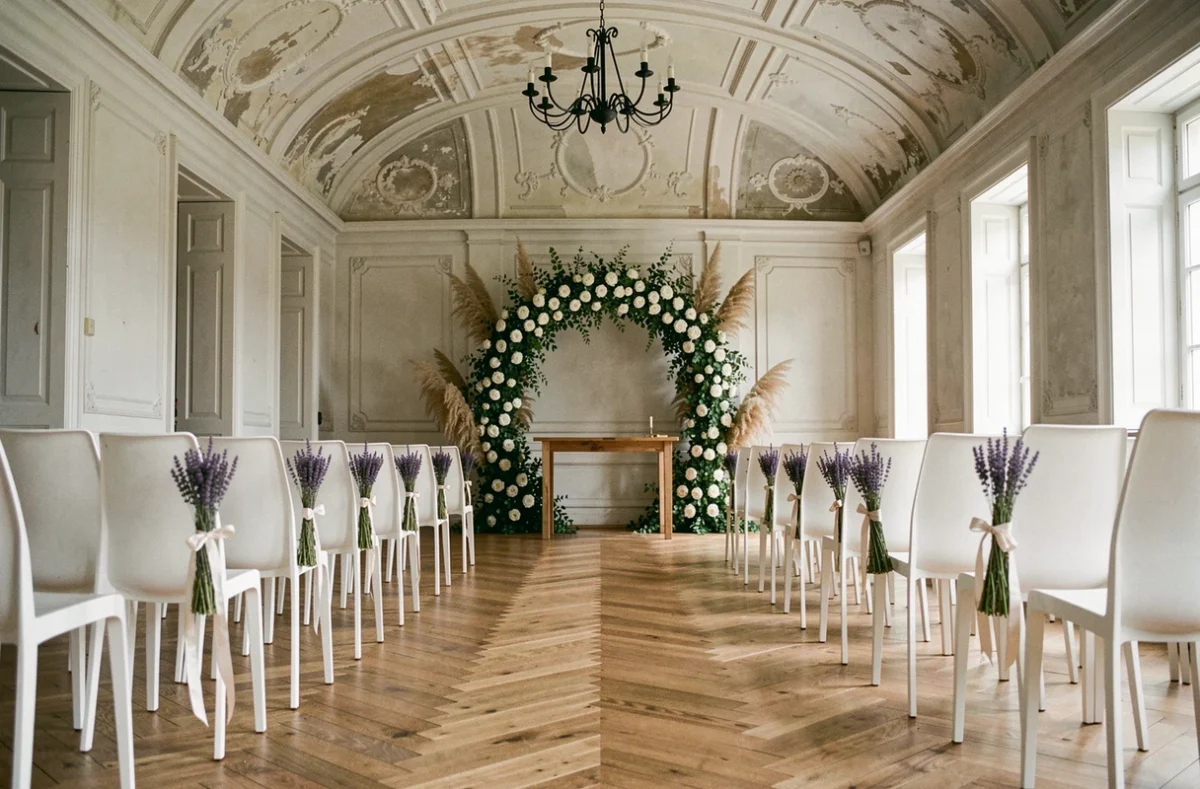
Reusing ceremony flowers as reception table arrangements is an appealing idea, often presented as an eco-friendly choice. In practice, reusing flowers requires a carefully planned transport schedule.
Flowers are out of water during dismantling, transport, and reinstallation. For arrangements featuring peonies, ranunculus, or hydrangeas, an hour without water in hot weather can be enough to affect their condition by the end of the evening. A florist specializing in eco-friendly weddings, interviewed by Actu.fr, recommends choosing hardy local, seasonal flowers and considering potted plants, which are better able to withstand being moved.
Three things to confirm with your florist
- The distance between the ceremony venue and reception hall, combined with dismantling time: beyond a certain point, delicate stems won’t hold up
- The type of container, which must allow for stable transport (damp floral foam in crates rather than vases filled with water)
- What happens to the flowers at the end of the evening: giving them to guests, donating them to a care home, or composting them—all options to plan for in advance
This level of coordination warrants a separate budget line for floral reuse, distinct from the original flower quote. The extra labor costs (dismantling, transport, and reassembly) can sometimes wipe out the expected savings.
Hidden costs of wedding décor rentals
A rental’s listed price almost never covers all the actual costs. Ceremony arches, candelabras, lounge furniture, vintage tableware: every rented item can incur additional charges that may not always appear in the initial quote.
An article on reception quotes recommends always asking for an itemized breakdown of the following:
- Delivery and collection of equipment, with costs depending on the distance and access conditions at the venue (stairs, dirt roads, no service elevator)
- Setup and dismantling by the rental company’s team, charged by the hour or as a flat fee, depending on the supplier
- Post-event cleaning and liability for breakages, sometimes covered by a deposit and sometimes by additional insurance
- The venue access window for setup: some venues charge extra for access the day before
Comparing two rental quotes without including these items is like comparing two pre-tax prices with different VAT rates. Ask for an all-inclusive quote covering delivery and breakages so you can weigh renting against buying and reselling on second-hand platforms.
Wedding table décor: visual harmony and guest comfort
Guests focus on the reception table for several hours. It’s tempting to pile on the decorative details, but an oversized centerpiece makes it harder for guests to talk to one another.
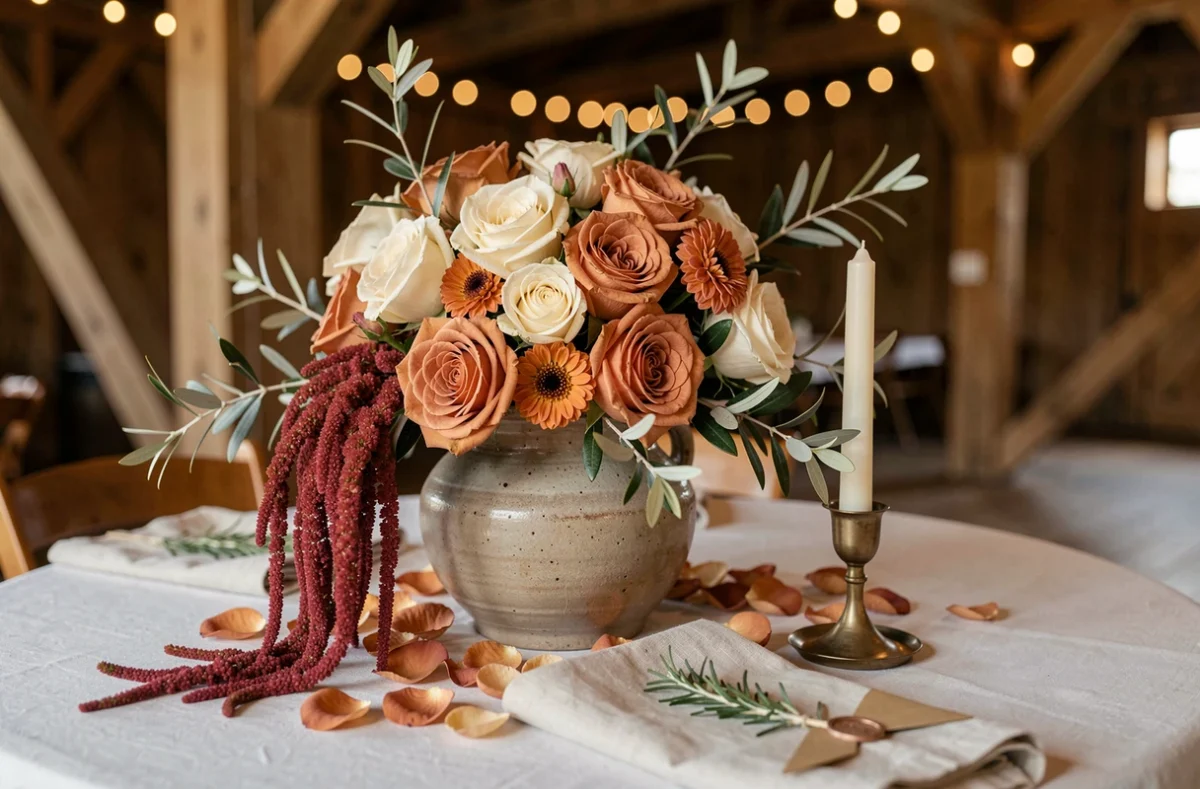
The rule of thumb is simple: a centerpiece should sit below the eye line of a seated guest or well above it (as with tall arrangements on stands). Anything in between creates a visual barrier between guests sitting opposite each other. Low arrangements featuring dense foliage, candles, and small vessels are best suited to standard round or rectangular tables.
Color palette and artificial lighting
A rustic or bohemian palette that looks great in natural light can take on a different cast under tungsten or LED lighting in a reception venue. Terracotta and mocha moss tones, popular in current inspiration boards, look different depending on the color temperature of the lighting. Ask the venue manager for the color temperature of the lights in kelvins, or plan to use enough candles to warm up the atmosphere.
Test your fabric and floral samples under the venue’s actual lighting, not just in daylight. An evening visit to the reception venue is all it takes to confirm or adjust your chosen palette.
The most successful wedding décor isn’t the kind that piles on every trendy detail; it’s the kind designed around the venue, its technical constraints, and the guests’ comfort. Compliant draping, flowers that last until dessert, a transparent quote, and a table where guests can talk—these details create the atmosphere far more reliably than yet another pampas grass arch.